GEO (Generative Engine Optimization) vs. SEO: The Future of Search in Digital Marketing
The world of digital marketing is evolving faster than ever. For years, Search Engine Optimization (SEO) has been the backbone of online visibility. But now, a new concept is gaining attention — Generative Engine Optimization (GEO).
If you’re running a business or managing a digital marketing strategy, understanding the difference between GEO and SEO is crucial. In this blog, we’ll break down both concepts in a simple and practical way so you can stay ahead of the competition.
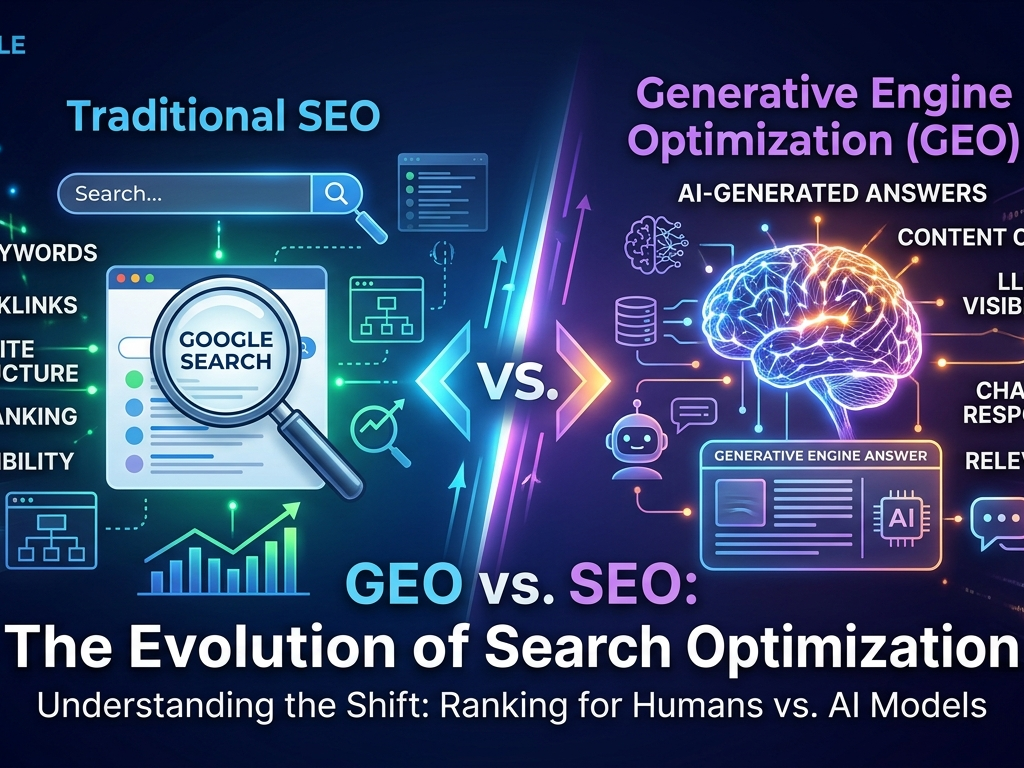
What is SEO (Search Engine Optimization)?
SEO is the process of optimizing your website to rank higher on search engines like Google, Bing, and Yahoo. The goal is simple:
👉 Get more organic traffic to your website.
Key Elements of SEO:
- Keyword research (e.g., “digital marketing in Bhopal”)
- On-page optimization (titles, meta descriptions, headings)
- Technical SEO (website speed, mobile-friendliness)
- Content creation (blogs, landing pages)
- Backlinks (links from other websites)
How SEO Works:
When a user types a query like “best digital marketing agency”, search engines scan millions of pages and show the most relevant results based on algorithms.
👉 SEO helps your website rank on search result pages (SERPs).
What is GEO (Generative Engine Optimization)?
GEO is a newer concept focused on optimizing your content for AI-powered search engines and generative platforms like ChatGPT, Google SGE (Search Generative Experience), and other AI assistants.
👉 Instead of just ranking on search pages, GEO helps your content get featured in AI-generated answers.
Key Focus of GEO:
- Answer-based content
- Context-rich information
- Conversational tone
- Authority and trust signals
- Structured and clear formatting
How GEO Works:
When a user asks an AI tool:
👉 “What is the best digital marketing strategy for small businesses?”
The AI doesn’t just show links—it generates a direct answer using multiple sources.
👉 GEO ensures your content becomes part of that generated answer.
hy GEO is Becoming Important in 2026
Search behavior is changing rapidly. Users no longer want to browse multiple websites—they want instant answers.
Trends Driving GEO:
- Rise of AI assistants
- Voice search growth
- Zero-click searches
- Personalized results
👉 This means fewer people are clicking links and more people are relying on AI-generated responses.
SEO is Not Dead — It’s Evolving
Let’s be clear:
👉 SEO is still very important.
But now, it’s not enough on its own.
Benefits of GEO for Your Business
- Higher brand visibility
- Better authority in your niche
- More qualified leads
- Future-proof marketing strategy
Final Thoughts
The digital marketing landscape is shifting from search engines to answer engines.
- SEO helps people find you
- GEO helps AI recommend you
👉 Businesses that adapt early will have a huge advantage.
Conclusion
GEO vs. SEO is not a battle—it’s a combination.
To succeed in 2026 and beyond:
👉 Use SEO to rank
👉 Use GEO to dominate AI-driven search
Add a Comment